Aims & Scope
IEEE J-ERM publishes peer-reviewed research on the interaction of electromagnetic fields with biological systems, spanning fundamental science to clinical applications. Topics include therapeutic and diagnostic uses of RF and microwave energy, electromagnetic compatibility in medical devices, numerical modeling, dosimetry, and emerging biomedical applications of electromagnetics.
IEEE J-ERM welcomes original research articles, review articles, letters, and special issue contributions from researchers worldwide. The journal covers the full spectrum from fundamental electromagnetic theory to applied clinical research.
Topics Covered
- Biomedical antennas, sensors, and wireless interfaces
- Body-area, on-body, in-body, and implant communication systems
- Wireless power transfer, energy harvesting, and batteryless biomedical devices
- Implantable, ingestible, wearable, and epidermal diagnostic and therapeutic systems
- RF, microwave, millimeter-wave, and terahertz sensors for biomedical applications
- Dielectric, microwave, millimeter-wave, and terahertz spectroscopy of biological materials
- Electromagnetic imaging, inverse scattering, and image reconstruction
- Magnetic resonance imaging and RF/microwave technologies for MRI
- Radiometry, thermography, and noninvasive thermal monitoring
- Radar and remote sensing for physiological monitoring and human activity tracking
- Microwave, RF, and electromagnetic ablation, hyperthermia, and thermal therapies
- Electromagnetic treatment planning, dosimetry, SAR, and patient-specific modeling
- Bioelectric and bioelectromagnetic modeling
- EM-field interactions with biological tissues, cells, and molecules
- Computational electromagnetics and multiphysics modeling for biomedical applications
- EM based diagnostic and therapeutic systems, devices, and instrumentation
- RF/microwave integrated circuits and front-ends for biomedical systems
- Point-of-care, lab-on-chip, and molecular diagnostic platforms using EM/RF/microwave techniques
- AI, machine learning, and data-driven methods for electromagnetic medicine and biology
- Digital twins and personalized electromagnetic medicine
- Multimodal biomedical systems combining EM/RF/microwave methods with optical, acoustic, thermal, or magnetic modalities
- Electromagnetic safety, exposure assessment, standards, and regulatory compliance
- RF/microwave-enabled telemedicine, remote monitoring, and connected healthcare systems
METRICS
Impact Factor
2.4
Eigenfactor
0.00123
Acceptance Rate
45
%
Sub-1st decision
47.9
d
Article Influence Score
0.582
CiteScore
7.4
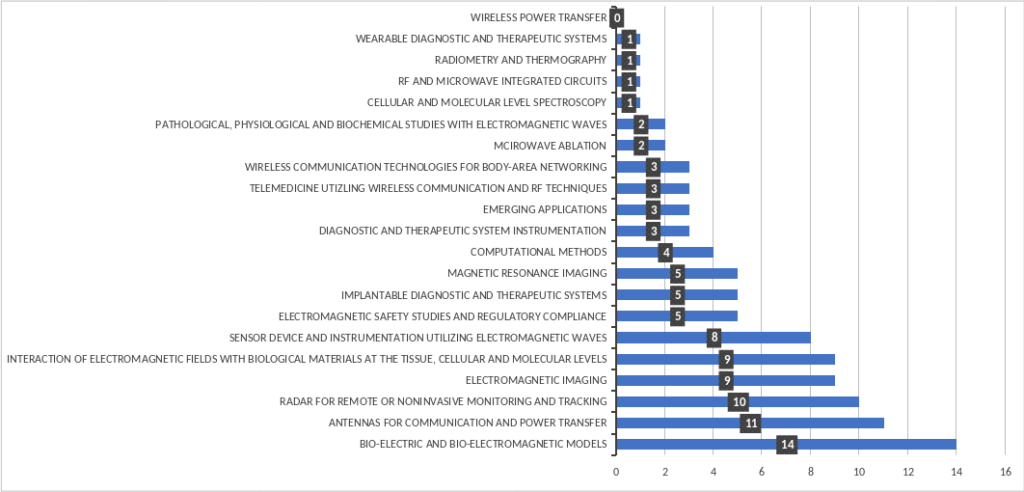
Submissions By Subject Area
2026 Year to Date; Percentage of submissions (out of 100 submissions YTD)