The Influence of Electrode Properties on Induced Voltage Gradient Along the Rat Optic Nerve
Read Description
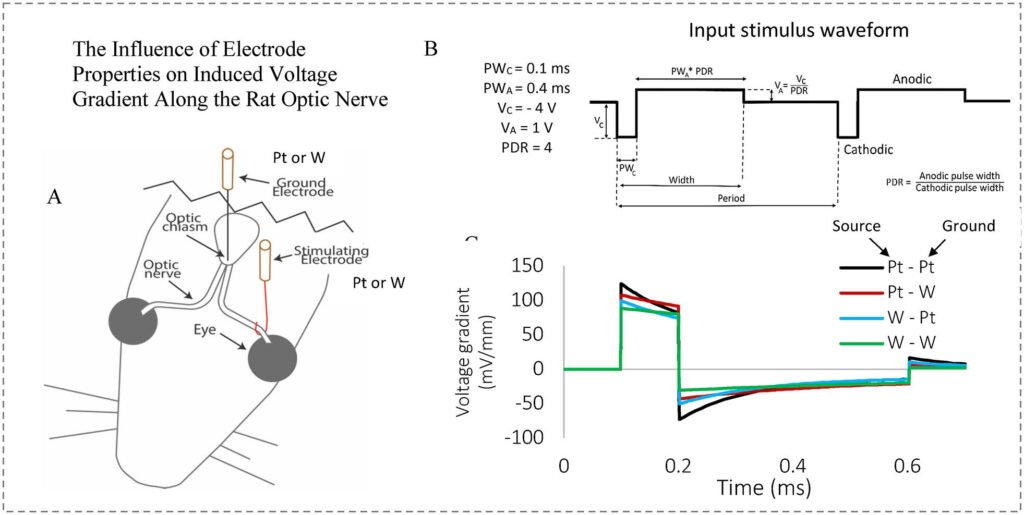
As larger EF gradients were shown to direct more efficient growth,investigations into the most effective stimulation strategies that can generate the greatest voltage gradient are needed before EF application can be developed into a technology to direct optic nerve regeneration in vivo. We performed ex-vivo experiments to compare the ability of different electrode materials, platinum vs. tungsten, to generate an EF gradient along the rat optic nerve. Platinum electrodes at both source and ground positions were found to generate the greatest voltage gradient along the optic nerve. Experimental results were used to inform an equivalent computational model of the optic nerve, which was subsequently employed to predict more effective electrode pair combinations. Our results confirmed that the platinum-platinum electrode pair generates the maximum voltage gradient which are highly dependent on electrode size and electrode-electrolyte interfaces. This computational platform can serve as a foundation for the development of electrical stimulation therapies for nerve regeneration.
Simultaneous Monitoring of Multiple People’s Vital Sign Leveraging a Single Phased-MIMO Radar
Read Description
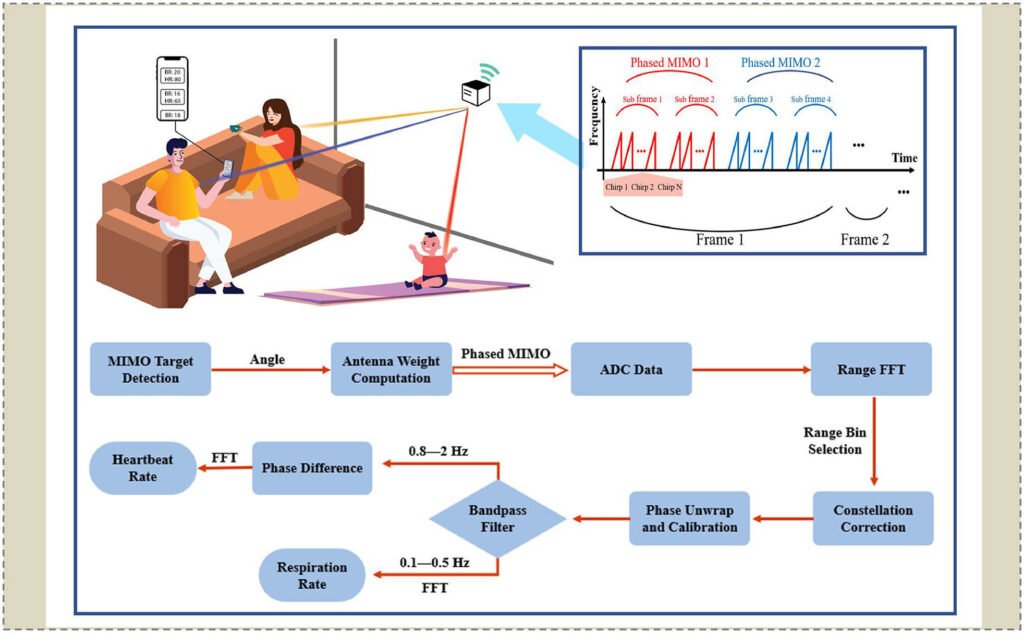
However, in recent years there is an emergence of contact-less vital sign monitoring techniques that rely on radio frequency signals. Early studies with continuous wave radars/WiFi devices have shown good success in detecting the vital signs of a single individual, while simultaneous monitoring of the vital signs of multiple, closely spaced subjects remains a challenge. In this paper, using an off-the-shelf Texas Instrument automotive FMCW radar, we design and implement a time-division multiplexing (TDM) phased-MIMO radar sensing system that allows high-precision vital sign monitoring of multiple subjects. The proposed sensing system can steer the beam towards the desired directions with a micro-second delay. The steerable beam enables capturing the vital signs of multiple individuals at the same radial distance to the radar. The proposed system enables the formation of a virtual array with aperture longer than that of the physical array. A Capon beamformer is used at the receiver side to combine the data collected from different transmit and receive antenna pairs corresponding to the virtual array. As all those pairs provide independent information about the targets, their combination significantly boosts the receiver signal-to-noise ratio. Based on the designed TDM phased-MIMO radar, we develop a system to automatically localize multiple human subjects and estimate their vital signs. Extensive evaluations show that under two-subject scenarios, our system can achieve more than 98.06% accuracy for breathing rate (BR) and more than 82.89% accuracy for heartbeat rate (HR) estimation, at a subject-to-radar distance of $text{1.6};m$ when the targets are facing the radar. The minimal subject-to-subject angle separation is $30^circ $ at a subject-to-radar distance of $text{1.6};m$, corresponding to a close distance of $text{0.3};m$ between two subjects, which outperforms the state-of-the-art.
Towards Brain MRI Adaptable to Head Size: Bowing RF Coil Phased Arrays
Read Description
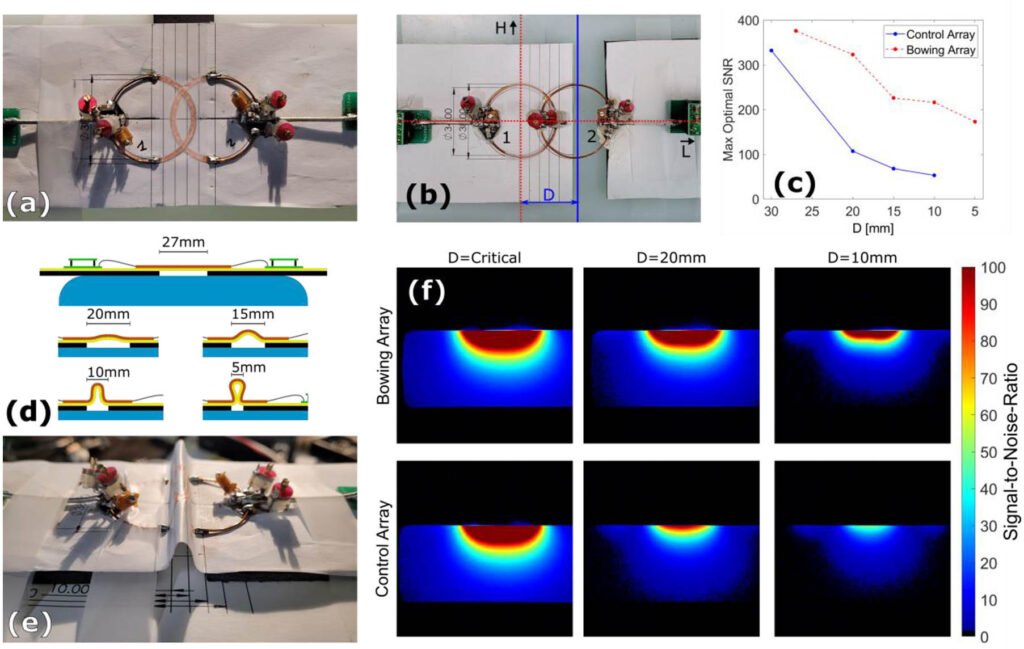
Bowing elements comprise of a flexible half and a rigid half. The arrays were then supported on translating boards connected so that a flexible gap between the boards corresponds to the bowing elements. The gap between the rigid coil elements was varied by discrete values to assess its performance under different bowing conditions. Results: signal-to-noise-ratio (SNR) and noise performance was compared between the two arrays. It is seen that a bowing array outperforms its rigid counterpart in terms of average SNR, max SNR, and signal coverage. We conclude that bowing array elements present a viable solution to the proposed hybrid rigid-flexible coil arrays.
Development and Characterization of Skin Phantoms at Microwave Frequencies
Read Description
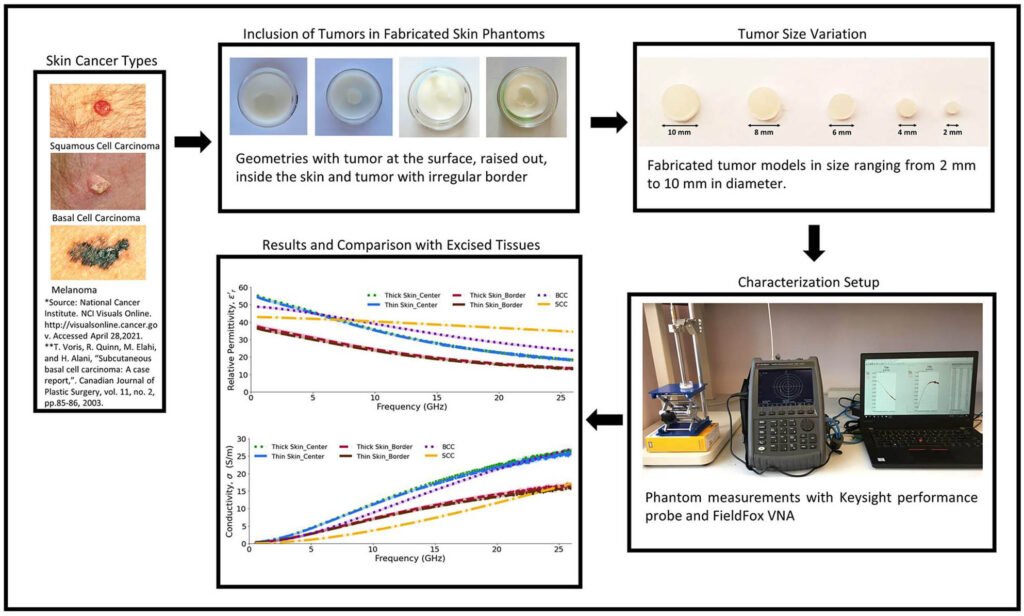
In this work, we develop and experimentally investigate multiple skin phantoms with tumor inclusions in the frequency range of 0.5–26.5 GHz. These heterogeneous phantoms are realized by varying the tumor size and placement relative to the skin. The tumors with irregular borders are also investigated. For analyzing the effect of underlying skin on dielectric properties, two skin thicknesses are considered: 8 mm and 2.5 mm. The proposed heterogeneous phantoms are developed using inexpensive materials: oil, gelatin, deionized water and formaldehyde. The dielectric properties of fabricated phantoms are characterized with Keysight performance probe connected with a FieldFox handheld vector network analyzer. Our results demonstrate that the dielectric properties of the developed phantoms closely agree with those of the excised malignant human tissues reported in the literature over the entire frequency range of 0.5–26.5 GHz and can be hence reliably used for experimental validation in studies towards microwave-based diagnostics of skin lesions.
A Study of Handgrip Force Prediction Scheme Based on Electrical Impedance Myography
Read Description
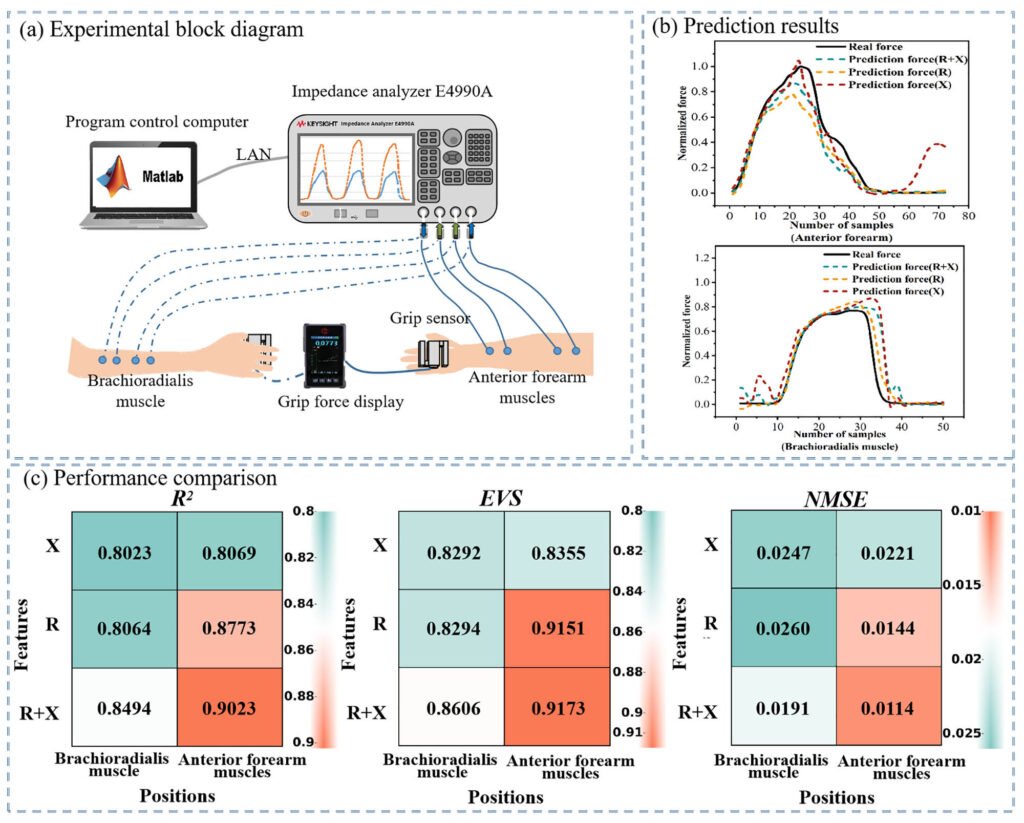
We conducted the signal acquisition experiments of impedance and handgrip force on the anterior forearm muscles and brachioradialis muscle. Afterwards, three evaluation metrics were introduced to compare the prediction results of various models, and the variability between models was analyzed using paired sample t-tests. The results showed that the model of handgrip force prediction based on anterior forearm muscles exhibited better performance in predicting. The evaluation metrics of $mathbf {R^{2}}$ , explained variance score (EVS) and normalized mean square error (NMSE) for the model fusing the feature parameters resistance (R) and reactance (X) were 0.9023, 0.9173 and 0.0114, respectively. Therefore, the feature parameters fusing R and X are the optimal input for the handgrip force prediction model. The anterior forearm muscles are the preferred position for impedance measurement over the brachioradialis muscle. This paper validated the feasibility of EIM for handgrip force prediction and provided a new reference and implementation scheme for muscle rehabilitation training and prosthetic control.
An Investigation on Conductive Intracardiac Communication Dynamic Channel Gain During the Cardiac Cycle for Leadless Pacemakers
Read Description
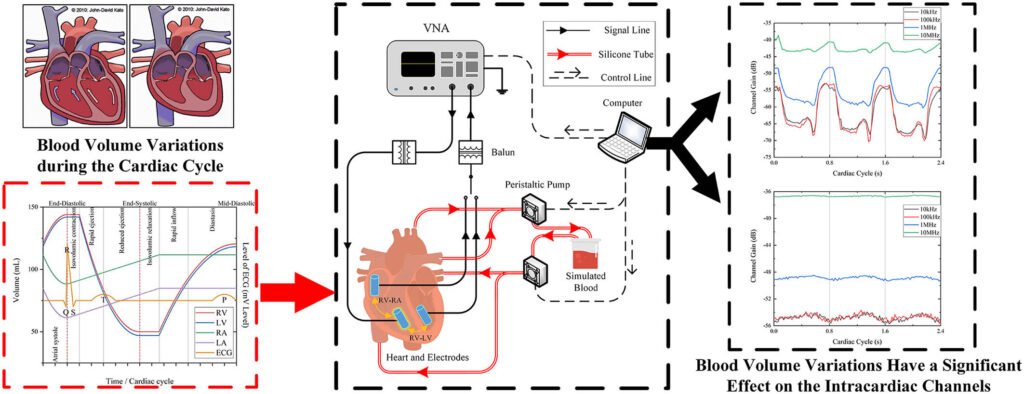
However, our preliminary in-vitro experiments suggested that blood volume variations also significantly impacted signal transmission. In this article, we analyzed the blood volume variations during the cardiac cycle and designed an in-vitro experimental platform containing a simulated heart beating system and an automatic channel characteristic acquisition system, which controlled two peristaltic pumps to realize the periodic blood volume variations and the continuous acquisition of channel gain. Through the in-vitro porcine heart experiment, the effect of frequency and blood volume variations during the cardiac cycle on two channel gains was analyzed. Considering the impact of high-frequency signal leakage, the channel gain variations of the low frequency are the main concern. The results showed that the channel gain was positively correlated with frequency; it changed periodically with blood volume variations in the cardiac cycle, and the trends were different due to the different signal paths of the two channels. For the Right Ventricle-Right Atrium channel, the gain varied from $-67$ dB to $-53$ dB and is inversely correlated with blood volume. The gain fluctuation range was smaller for the Right Ventricle-Left Ventricle channel, about 2 dB. This study shows that the gain of intracardiac communication channels, especially the RV-RA channel, is influenced by blood volume variations during the cardiac cycle.