Deep Learning Enhanced Contrast Source Inversion for Microwave Breast Cancer Imaging Modality
Read Description
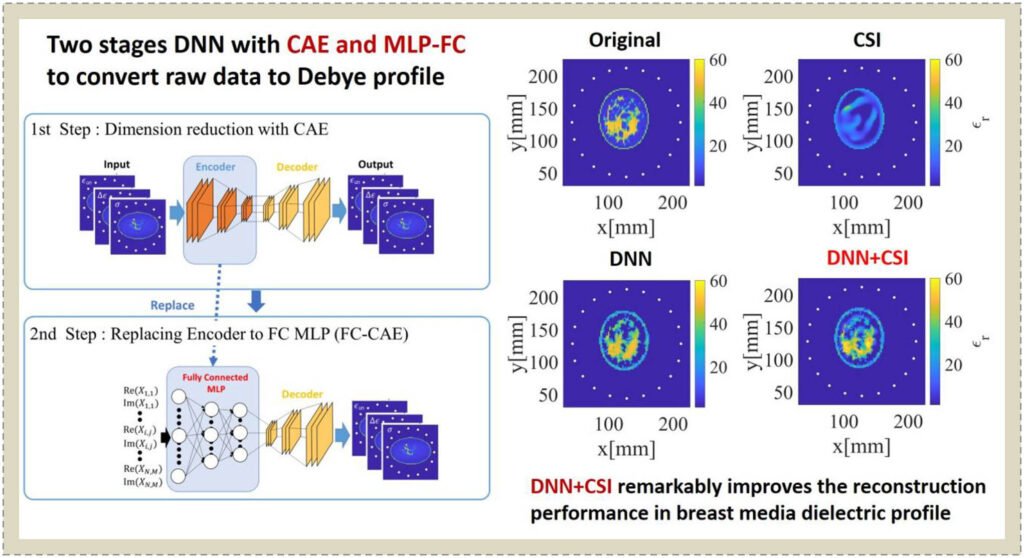
We focus on CSI as a low complexity approach, and implement a deep convolutional autoencorder (CAE) scheme using radar raw-data, which enhances the convergence speed and reconstruction accuracy. Numerical tests using MRI-derived realistic phantoms demonstrate that the proposed method significantly enhances the reconstruction performance of the CSI.
Channel Characteristics Analysis of Galvanic Coupling Intra-Body Communication
Read Description
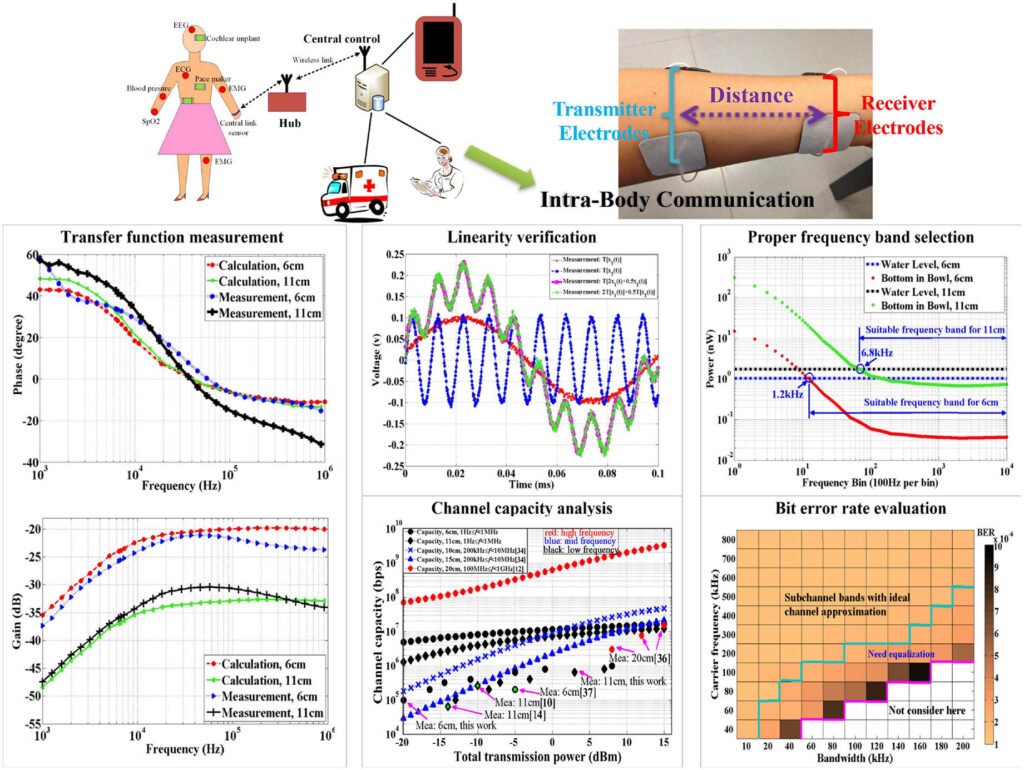
Nevertheless, such analysis has not been systematically addressed. To this end, the transfer function from the quasi-static model in the electromagnetic field is considered at first. Then, the linearity of the galvanic coupling IBC channel is verified. Besides, the proper frequency band for data transmission is investigated using the water-filling algorithm. Moreover, the theoretical Bit Error Rate (BER) performances of different modulations are studied. Results revealed that the galvanic coupling IBC channel can be modeled as a linear band-limited Additive White Gaussian Noise (AWGN) channel. Finally, suitable modulations for various scenarios are discussed based on the channel characteristics found. Consequently, this work can further enrich the design of the IBC for medical applications.
Development of a Coherent Model for Radiometric Core Body Temperature Sensing
Read Description
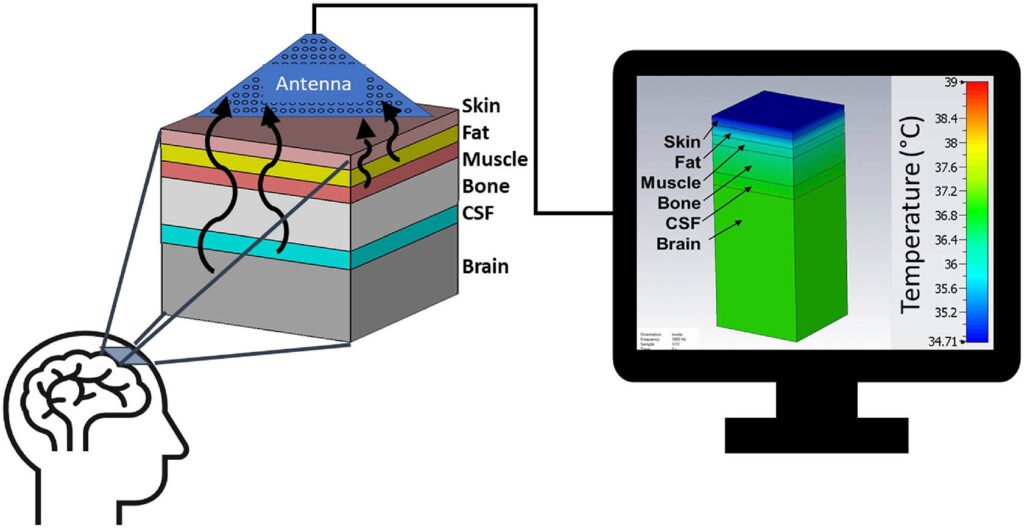
The resulting temperature profile is fed into the forward electromagnetic (EM) model to determine the emitted brightness temperature at various points in time. To accurately retrieve physical temperature via radiometry, the utilized model must incorporate population variation statistics and cover a wide frequency band. The effect of human population variation on emitted brightness temperature is studied by varying the relevant thermal and EM parameters, and brightness temperature emissions are simulated from 0.1 MHz to 10 GHz. A Monte Carlo simulation combined with literature-derived statistical distributions for the thermal and EM parameters is performed to analyze population-level variation in resulting brightness temperature. Variation in thermal parameters affects the offset of the resulting brightness temperature signature, while EM parameter variation shifts the key maxima and minima of the signature. The layering of high and low permittivity layers creates these key maxima and minima via wave interference. This study is one of the first to apply a coherent model to and the first to examine the effect of population-representative variable distributions on radiometry for core temperature measurement. These results better inform the development of an on-body radiometer useful for core body temperature measurement across the human population.
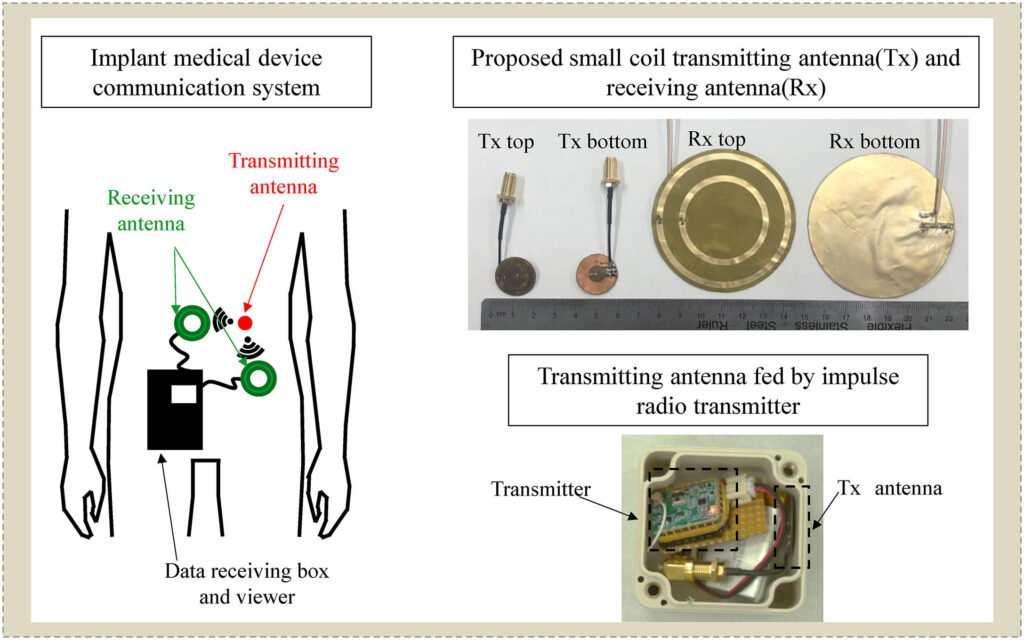
Small Coil Antenna With Magnetic Sheet for Implantable Medical Device Communication in 40–60 MHz Band
Read Description
The proposed antenna is fed from a battery-powered impulse radio (IR) transceiver peaking at 10–60 MHz, and the antenna is designed to be wideband for higher data communication rate. Simulation and measurement of reflection and transmission coefficients confirmed operation at 40–60 MHz. In addition, a battery-powered IR transceiver is used to measure the transmission performance in a 2/3 muscle phantom. As a result, communication at a data rate of 20 Mbps is achieved at a distance of 90 mm in the 2/3 muscle phantom.
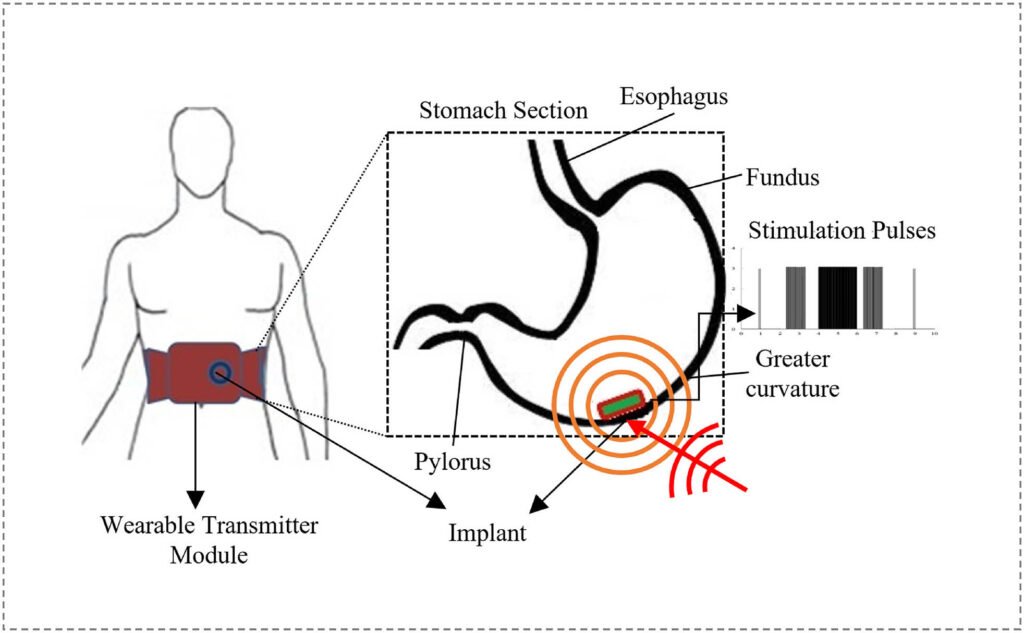
Implantable Radio Frequency Powered Gastric Electrical Stimulator
Read Description
The device harvests electromagnetic-wave energy and delivers controlled electrical pulses to the stomach tissues to initiate neural activities in vagus nerves and regain normal motility and contraction. With the goal to optimize the wireless power transfer efficiency, various antenna configurations have been investigated. To enable remotely reconfiguring the device to meet the patients’ needs after implantation, a novel method of changing the settings, without an additionally dedicated wireless communication channel and protocols that could increase the implant size and power consumption, has been proposed and demonstrated in this work.
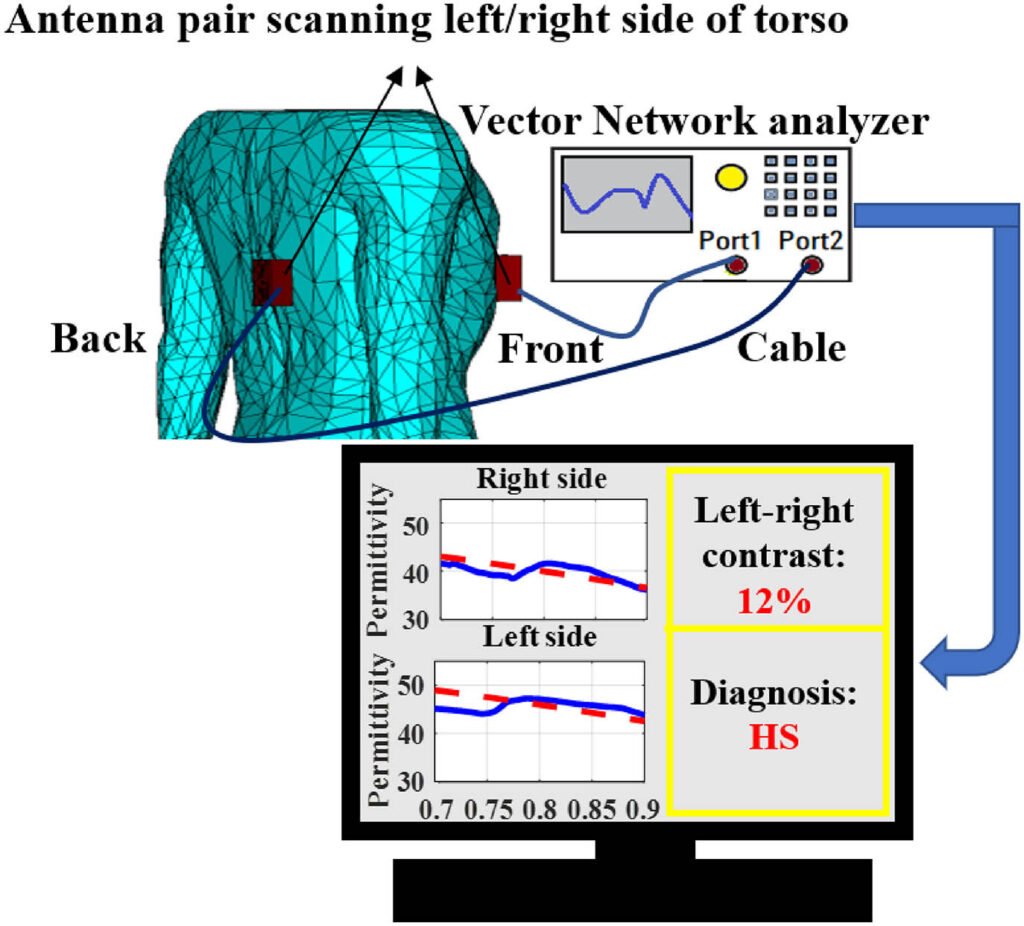
Electromagnetic Method for Steatotic Liver Detection Using Contrast in Effective Dispersive Permittivity
Read Description
Hence, this study proposes an electromagnetic technique to assist in observation and detection of hepatic steatosis. Effective permittivity contrast between left and right sides of the torso is exploited for the aim of detection. Firstly, the transfer functions of the transmitter-receiver paths on the left and right sides of the torso are modeled using a 2D line source approximation to form a non-linear equation system. Secondly, the system is solved with respect to the vector of effective permittivity values in a successive iteration. Thirdly, the estimated permittivity values are stacked together to create a dispersive permittivity curve. Permittivity modeling and statistical frequency selection are performed to remove outliers. Finally, the left/right effective permittivity contrast is calculated over the selected samples. The method is validated by realistic computer simulations and human measurements. In both scenarios, left/right permittivity contrast is higher and distinguishable in steatotic livers, which have 15% more diffused fat than healthy cases. The results verify the potential of electromagnetic systems, which are safe, low-cost, and portable, in the detection of hepatic steatosis.