Study and Suppression of Multipath Signals in a Non-Invasive Millimeter Wave Transmission Glucose Sensing System
Maria Koutsoupidou, Helena Cano-Garcia, Roberto L. Pricci, Shimul C. Saha, George Palikaras, Efthymios Kallos, Panagiotis Kosmas.
Read Description
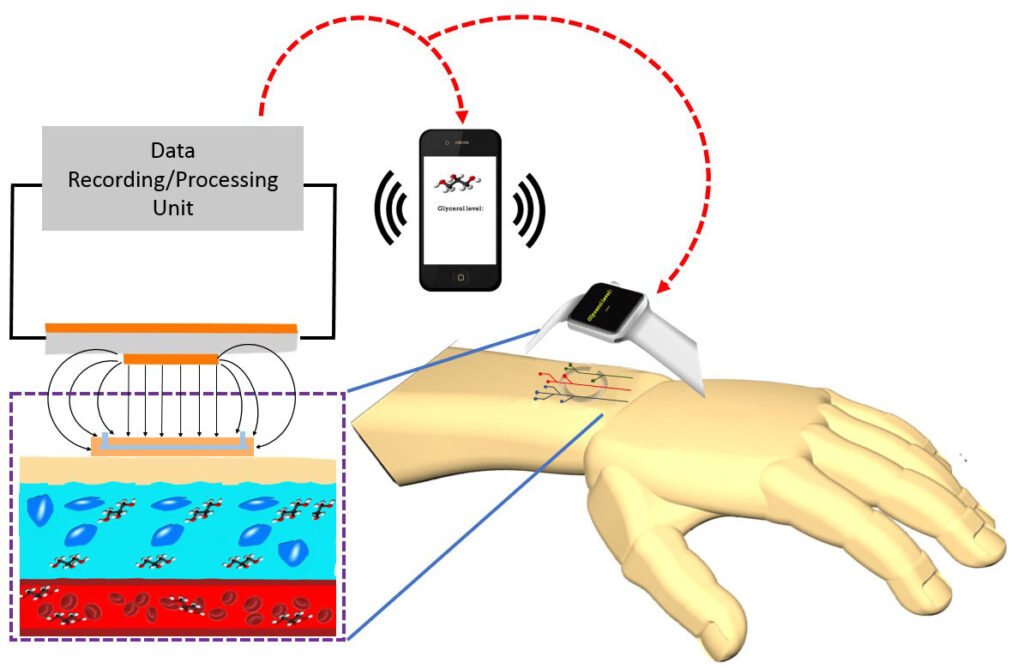
This paper studies the impact of these wave phenomena on the signals transmitted and received from a pair of antennas designed to sense glucose changes via changes in transmission through a sample. Numerical simulations and controlled experiments with glucose solutions demonstrate for the first time that unwanted signal contributions from mm surface waves along the tissue can dominate the received signals but can be reduced with the use of appropriately placed absorbers around the antenna sensors. As a result, the sensitivity of such a sensing system to glucose changes is increased. This finding can be very useful in the design and development of the glucose sensor under study, as well as for other EM-based diagnostic medical applications.
×
Take Out Message
Take-Home Messages
- The paper studies the significant impact of multipath wave propagation (surface and diffraction waves) on electromagnetic (EM) sensing systems, which is often overlooked in the design and development of EM sensors.
- System simulations and experimental results with a millimeter (mm)-wave sensor demonstrate the need to suppress these unwanted signals in order to increase EM sensing sensitivity.
- Experimental measurements demonstrate that sensor’s sensitivity to glucose concentrations is almost doubled by suppressing multipath waves with appropriate use of absorbers.
- Our study focuses on sensing glucose changes with mm-waves, but this analysis can be useful for any application in EM biomedical sensing which requires the detection of weak signals propagating through lossy tissues.
A Radiating System for Low Frequency Highly Focused Hyperthermia with Magnetic Nanoparticles
Danilo Brizi, Nunzia Fontana, Giulio Giovannetti, Luca Menichetti, Laura Cappiello, Saer Doumett, Costanza Ravagli, Giovanni Baldi, Agostino Monorchio.
Read Description
Then, through an electromagnetic software based on the Method of Moments (MoM), we performed numerical simulations of the coil that resulted in excellent agreement with the experimental measurements conducted at the workbench on a fabricated prototype. After that, a radiating system consisting of the coil, a high-power radiofrequency signal generator and a set of magnetic nanoparticles have been set up. We carried out several experimental trials with different samples of magnetic nanoparticles in order to demonstrate the focusing property of the proposed system. The results we obtained suggested that a careful design of the radiating system could pave the way towards more efficient and safer magnetic hyperthermia treatments in clinical applications.
×
Take Out Message
Take-Home Messages
- We present a novel radiofrequency radiating system for focused hyperthermic applications with magnetic nanoparticles.
- Safe, efficient and targeted treatments of hyperthermia with magnetic nanoparticles can be achieved through the proposed RF radiating system.
- In particular, the focus of the system is an innovative and effective therapy of superficial tumors, as, for instance, melanoma and breast cancer.
- Although the challenging low frequency range (hundreds of kHz), the system accomplishes a precise and delimited radiofrequency magnetic field distribution, avoiding indiscriminate tissue exposure.
- The synergy between a careful design of the radiating system and research on innovative magnetic nanoparticles can pave the way towards more efficient and safer magnetic hyperthermia treatments in clinical applications.
Design and Evaluation of Affective Virtual Reality System Based on Multimodal Physiological Signals and Self-Assessment Manikin
Dan Liao, Lin Shu, Guodong Liang, Yingxuan Li, Yue Zhang, Wenzhuo Zhang, Xiangmin Xu.
Read Description
Design elements including subject features, sound features, motion features and color features were extracted by referring to the referenced emotion materials, art works and the existing VR scenes. Affective VR scenes were then designed by Unreal Engine 4.12 and their effectiveness was validated by Self-Assessment Manikin (SAM). Furthermore, arousal was used as an indicator to compare the difference of ecological validity between VR and video emotional materials with an intergroup experiment through Electroencephalography (EEG), Heart Rate (HR), Galvanic Skin Response (GSR), and SAM. Results proved that VR scenes could achieve the same emotion elicitation as video. Especially, there was significant difference in measures of Fearful in SAM evaluation, indicating that VR emotion materials were expected to deliver a good effect on negative emotional scenes. The proposed AVRS as well as the multimodal physiological signal database with valence, arousal and dominance (VAD) labels could help the development of emotion related studies.
×
Take Out Message
Take-Home Messages
- This paper proposed a new Affective Virtual Reality System (AVRS), and assessed arousal with Electroencephalography (EEG), Heart Rate (HR), Galvanic Skin Reaction (GSR) and Self-Assessment Manikin (SAM).
- VR emotion materials could deliver a better emotion elicitation effect than 2D video on negative emotional scenes according to an intergroup experiment.
- AVRS was proved as an effective material capable of eliciting emotion for psychological research mental illness diagnosis and virtual reality interaction research.
- This system can be applied to psychological research, mental illness diagnosis and virtual reality interaction research.
Noncontact Measurement of Autonomic Nervous System Activities Based on Heart Rate Variability Using Ultra-Wideband Array Radar
Takuya Sakamoto, Kosuke Yamashita.
Read Description
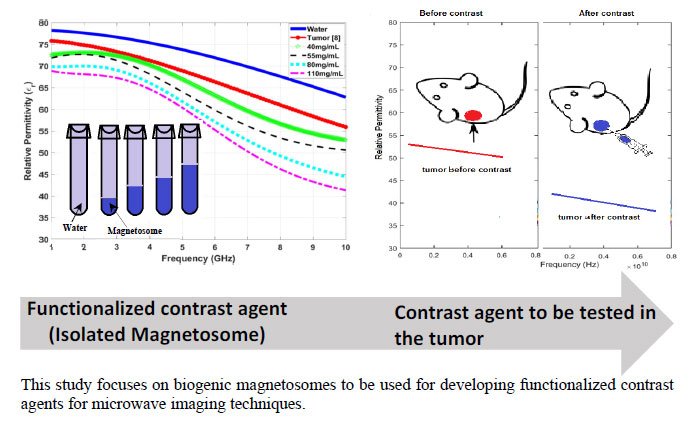
Continuous heart rate measurement using radar is, however, a difficult task because accuracy is compromised by numerous factors, such as the posture and motion of the target person. In this study, we introduce techniques for increasing the accuracy and reliability of the noncontact measurement of heart rate variability. We demonstrate the performance of the proposed techniques by applying them to radar measurement data from a sleeping person, and we also compare its accuracy with electrocardiogram data.
×
Take Out Message
Take-Home Messages
- Using an electromagnetic wave sensor, that is, radar, we demonstrated that autonomic nervous system activities and heart rate variability can be measured successfully during sleep in a noncontact manner.
- Our radar-based system measured the heart inter-beat interval with an average error of 25.9 ms and autonomic nervous system index with an average correlation coefficient of 0.93 for reference electrocardiogram (ECG) data, which indicates the sufficient accuracy and reliability of our proposed techniques.
- Our proposed techniques can be applied to healthcare and clinical applications that require long-term and unobtrusive monitoring of a person’s physical and mental health.
- Our proposed techniques are the first to achieve the accurate measurement of an autonomic nervous system index using a radar system, and increased the correlation coefficient with reference ECG data by 1.7 times on average compared with a conventional system.
- Our proposed techniques evaluated the reliability of the heart rate estimated using a radar-based noncontact measurement system, which is indispensable in practice, but has never been achieved by existing techniques.
Toward Magnetosomes for Breast Cancer Theranostics
Abas Sabouni, Jakob Short, William Terzaghi.
Read Description
Our results show that biogenic magnetosomes can increase relative permittivity contrast between 9-25% in the microwave frequency range from 1-10 GHz.
×
Take Out Message
Take-Home Messages
- This study investigates the potential use of biogenic magnetosomes as a contrast agent for microwave imaging techniques for breast cancer detection.
- We propose a functionalized contrast agent which is capable of decreasing the permittivity and increasing the electrical conductivity of breast tumor tissue based on the concentration of the magnetosome solution.
- In particular, the focus of the system is an innovative and effective therapy of superficial tumors, as, for instance, melanoma and breast cancer.
- The targeted medical application of this study is a potential new contrast agent to be used to improve microwave imaging for breast cancer detection.
Hierarchical Sensor Fusion for Micro-Gestures Recognition with Pressure Sensor Array and Radar
Haobo Li, Xiangpeng Liang, Aman Shrestha, Yuchi Liu, Hadi Heidari, Julien Le Kernec, Francesco Fiorane.
Read Description
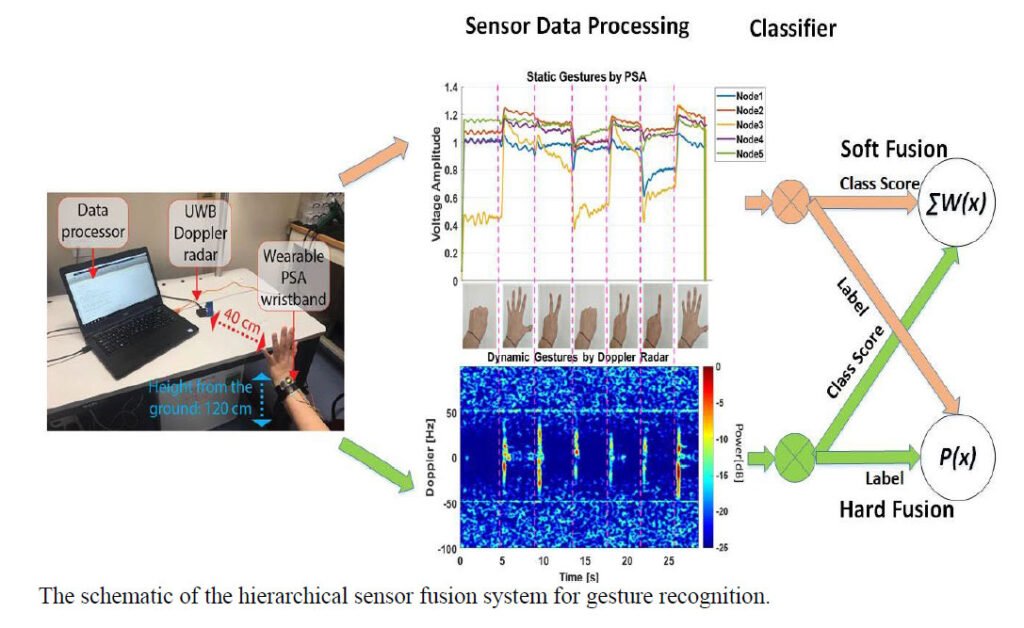
Then, a robust wrapper method is applied on the features from both sensors to search the optimal combination. Subsequently, two hierarchical approaches where one sensor acts as ‛enhancer‚ of the other are explored. In the first case, scores from Doppler radar related to the confidence level of its classifier and the prediction label corresponding to the posterior probabilities are utilized to maximize the static hand gestures classification performance by hierarchical combination with PSA data. In the second case, the PSA acts as an ‛Enhancer‚ for radar to improve the dynamic gesture recognition. In this regard, different weights of the ‛Enhancer‚ sensor in the fusion process have been evaluated and compared in terms of classification accuracy. A realistic cross-validation method is chosen to test one unknown participant with the model trained by data from others, demonstrating that this hierarchical fusion approach for static and dynamic gestures yields approximately 16.7% improvement in classification accuracy in the best cases.
×
Take Out Message
Take-Home Messages
- We proposed a hierarchical model to utilize radar as an ‘Enhancer’ to complement with the PSA (Pressure Sensor Array) in improving the static gestures recognition rates, on the contrary, in the dynamic gesture case scenario the PSA acts as an ‘Enhancer’ to boost the radar performance.
- Sequential forward selection (SFS) significantly reduces the computational intensity in terms of less features and improves the classification performance.
- For the second-stage of the hierarchical model, soft and hard fusion methods are implied respectively to promote the classification accuracy and eliminate the false alarms. Different weights of the ‘Enhancer’ output are verified and compared in terms of the accuracy in the soft fusion process.
- Soft fusion improves the accuracy by 16.7% and 11.1% with respect to static and dynamic gesture identification, whereas hard fusion reduces the accuracy variance across all the participants and produces a subsequent improvement about 5.5% in the dynamic gestures.
- Future work involves more gestures and more participants with neural network-based algorithm and additional sensors configurations and fusion approaches.