A Methodology for Remote Microwave Sterilization Applicable to the Coronavirus and Other Pathogens using Retrodirective Antenna Arrays
Read Description
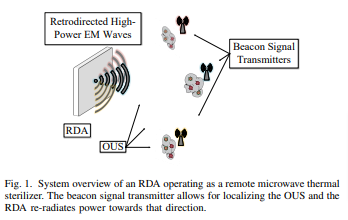
A beacon signal is required to self-steer the transmitted power from the designed retrodirective antenna array (RDA) towards the OUS; once the liquid film reaches the required temperature, the sterilization can be considered complete. Results suggest that the process takes 5 minutes or less for an angular coverage range over 60 whilst abiding by the relevant safety protocols. This paper also models the power incident onto the OUS and results are consistent with full-wave simulations. A practical RDA system is developed operating at 2.5 GHz and tested through the positioning of a representative target aperture surface. Measurements, developed by sampling the power transmitted by the heterodyne RDA, are reported for various distances and angles, operating in the near-field of the system. To further validate the methodology, an additional experiment investigating virus deactivation through microwave heating was also reported using live Coronavirus (strain 229E). Possible applications of the method include the sterilization of ambulances, medical equipment, and internet of things (IoT) devices.
Skin Phantoms for Microwave Breast Cancer Detection: A Comparative Study
Read Description
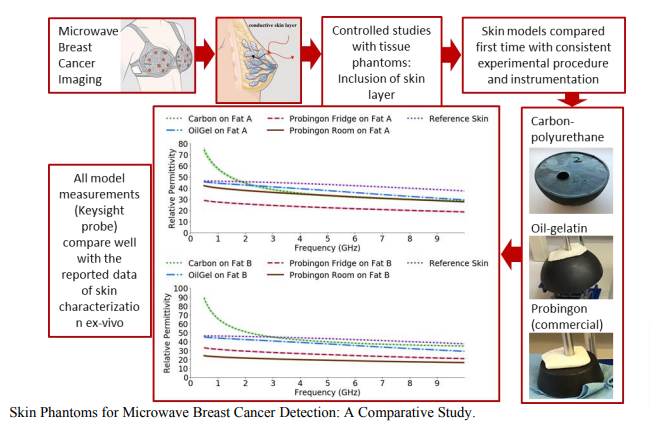
First, we verify the properties of two polyurethane-based fat-mimicking phantoms. Then, we evaluate the skin phantoms in larger blocks and as 2-mm thin layers. Finally, we conduct two separate experiments with the 2-mm skin phantoms layered over the two different fat phantoms. All the results are compared to dielectric properties of excised human skin tissue reported in the literature.
Enhancement of Remote Vital Sign Monitoring Detection Accuracy Using Multiple-Input Multiple-Output 77 GHz FMCW Radar
Read Description
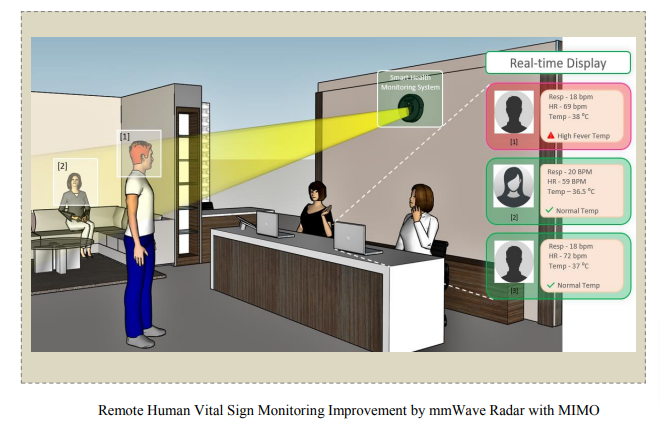
As mmWave received signals also have higher sensitivity to body motions, these effects typically degrade the accuracy of heart rate (HR) detection. To overcome this challenge, MIMO configuration can be used to improve the SNR level by taking advantage of its channel diversity. We use here a Frequency Modulated Continuous Wave (FMCW) radar from Texas Instruments (TI) at 77 GHz to collect data from 192 channels. Additionally, vital sign information is extracted using Arctangent Demodulation (AD) and Maximal Ratio Combining (MRC) combined with an adapted-wavelet Continuous Wavelet Transform (CWT) are utilized to demonstrate improvement of HR estimation accuracy.
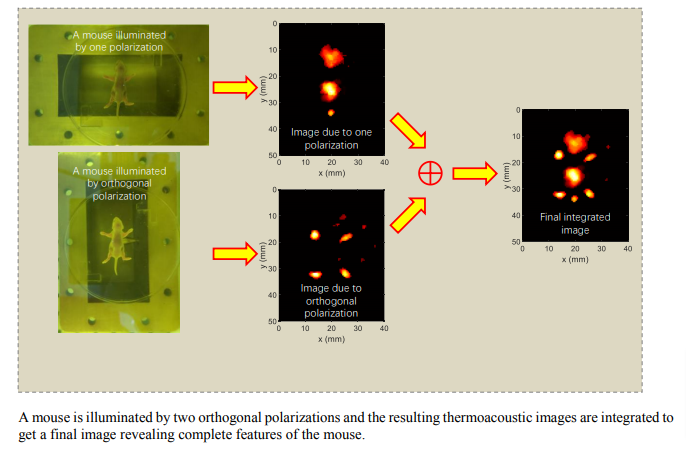
Microwave-induced Thermoacoustic Imaging of Small Animals Applying Scanning Orthogonal Polarization Excitation
Read Description
Although circular polarization excitation has been reported to enhance MITAI, we perform some simulation works using realistic breast phantoms to prove that the homogeneity of microwave power distribution in the phantoms using orthogonal polarization excitation is comparable to that using circular polarization excitation. Compressive sensing is also applied to enhance the time efficiency of the system. Experiments applying a mouse and a frog sample are conducted. The results indicate that the SOP excitation mechanism can completely reveal the structure of the small animals due to improved power homogeneity. The proposed MITAI-SOP technique is superior to circularly polarized antenna (CPA) based modality since the former avoids the deficiency of CPA in bandwidth, power capacity and efficiency. This work presents a practical and easy-to-implement paradigm for high-quality imaging of small animals and big biological samples using MITAI.
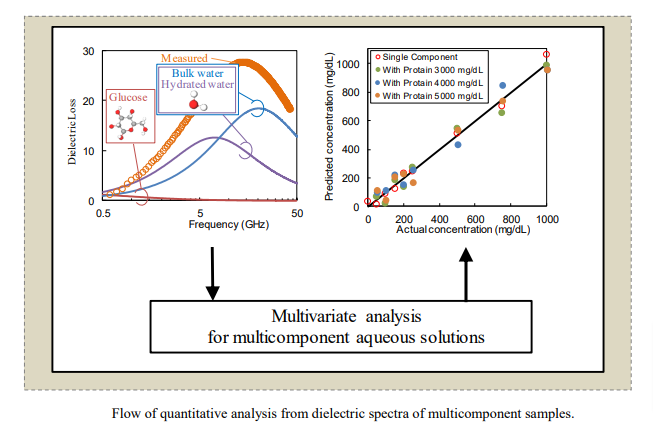
Broadband Dielectric Spectroscopy for Quantitative Analysis of Glucose and Albumin in Multicomponent Aqueous Solution
Read Description
Using regression models derived from different concentrations of glucose in a solution with bovine serum albumin (BSA), we analyze solutions considering the physiological range of both components. Prediction errors for the glucose and BSA concentrations are estimated to be 54 and 83 mg/dL, respectively, even for varied concentrations of each component. We also investigate the dependence of the glucose prediction error on the solution temperature. The prediction error for the glucose concentrations is estimated to be 99 mg/dL at a difference of 1 K. This technique will be ease to implement with a broadband microwave sensor or with biomedical sensors that require the capability to analyze multiple components in solutions.
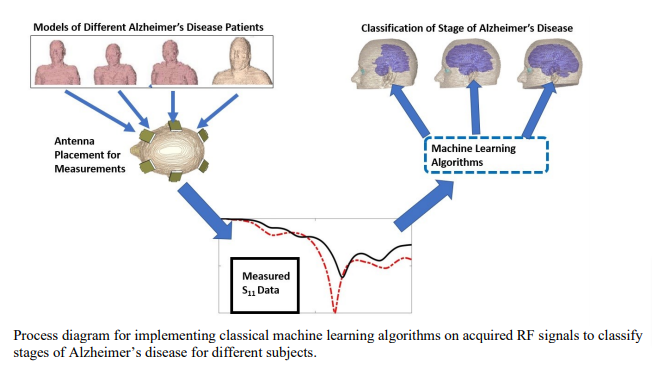
Classification of Alzheimers Disease using RF Signals and Machine Learning
Read Description
Current progression monitoring techniques are based on scans from MRI and PET, which can be inconvenient for patients to use. In addition, more intelligent and efficient methods are needed in order to provide predictions on what the current stage of the disease is and strategies on how to slow down its progress over time. Machine learning has been around for several decades and has recently been making important contributions in medical applications. While machine learning methods have been utilised for diagnosing Alzheimers disease, they focus on using image data from MRI and PET scans, which can be difficult for patients to obtain. In this paper, machine learning was used with RF data captured from 9 different head models showing different stages of Alzheimers disease. The RF data was processed in several machine learning algorithms. Each machine learning models prediction and accuracy was generated and the results were compared to determine which machine algorithm could be used to classify different stages of Alzheimers disease using RF data that was obtained noninvasively. Results from the study showed that overall the logistic regression model had the best accuracy of 98.97% and efficiency in differentiating between 4 different stages of Alzheimers dise