Hyperthermia Treatment Planning: Clinical Application and Ongoing Developments
Read Description
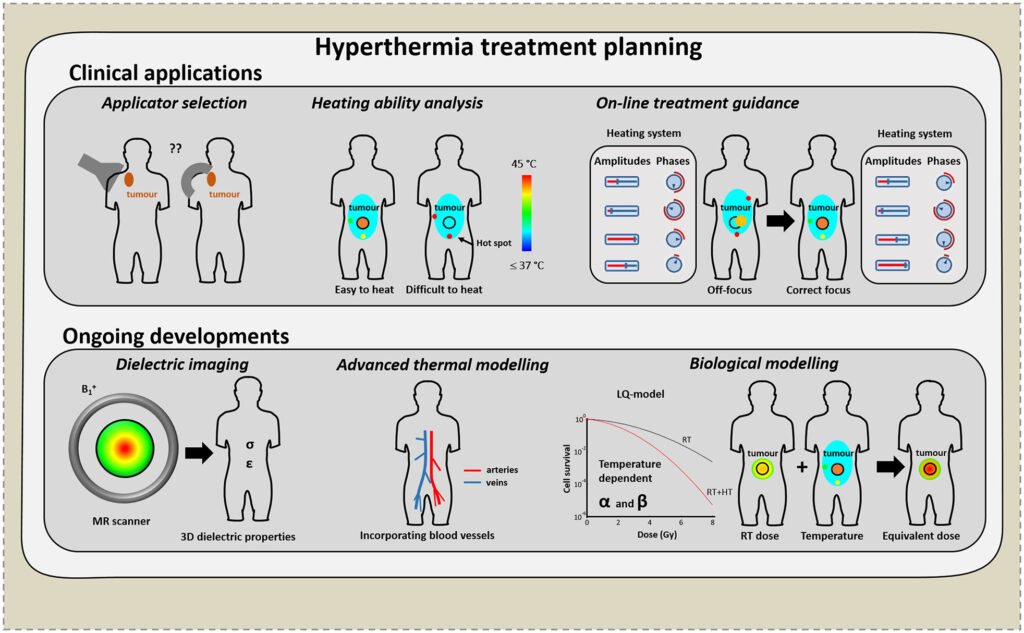
Hyperthermia treatment quality depends on tumour temperatures achieved and treatment planning (i.e., simulation and optimization of absorbed power and temperature distributions) could be very useful to ensure and improve treatment quality. Hyperthermia treatment planning was mainly a research tool for decades, because of high computational costs and limited quantitative accuracy of treatment planning predictions due to a lack of patient-specific tissue properties. Thanks to developments over the past decade, treatment planning becomes increasingly important in the clinical workflow. Presently, main clinical applications of hyperthermia treatment planning are 1) applicator selection, 2) heating ability evaluation and 3) on-line treatment guidance. To improve the reliability and further increase applicability of treatment planning, ongoing developments focus on 1) dielectric imaging to derive patient-specific dielectric properties, 2) advanced thermal modelling including discrete vasculature and 3) biological modelling to predict the radiosensitizing effect of hyperthermia in terms of equivalent radiation dose. The increased clinical application and ongoing efforts will further improve treatment quality.
Towards the Robust and Effective Design of Hyperthermic Devices: Improvement of a Patch Antenna for the Case Study of Abdominal Rhabdomyosarcoma With 3D Perfusion
Read Description
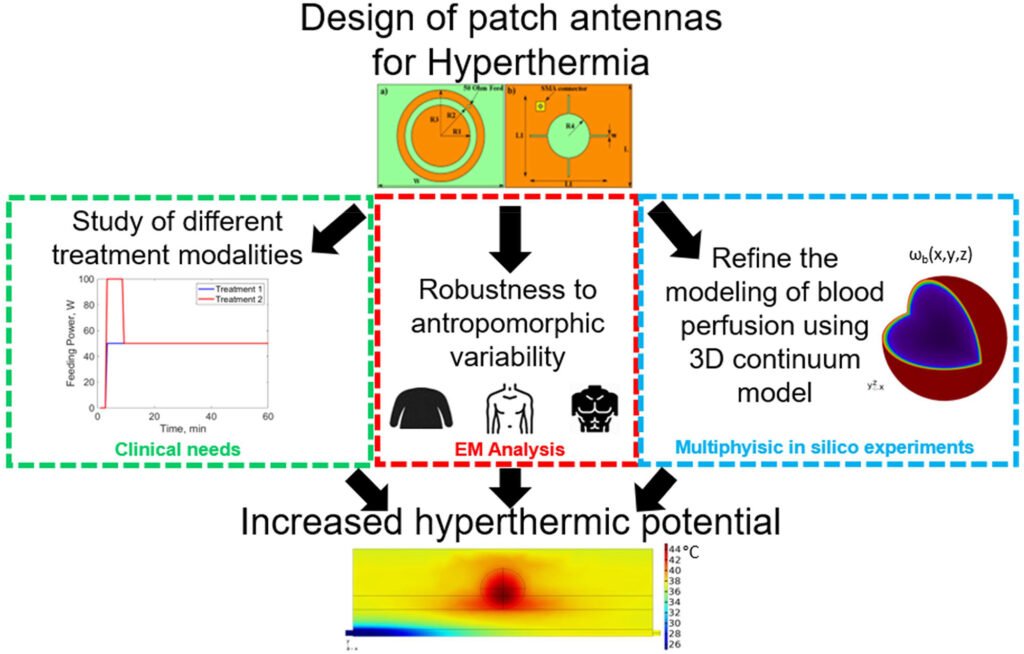
The proposed general approach is used to investigate the specific case of the hyperthermia treatment of abdominal rhabdomyosarcoma. Instead of using patient-specific geometries with discrete vascular tree models, a surface phantom with a continuum 3D blood perfusion model of tumors is used. The geometrical parameters of the antennas are selected to provide a robust design against the variation of the phantom parameters. The effectiveness of the antenna is evaluated simulating the treatment with a recent non-linear multi-physic model, considering the different description of tumor vasculature. A more robust and effective design is obtained, with respect to its previous version. Indeed, the antenna bandwidth is increased with about 7%. The treatment performed using the old version of the antenna lead to unsuccessful results (40 °C after 60 min), whilst the novel robust design could successfully treat the target region. The new version of the patch can withstand a temperature of 42.5 °C for 60 min of treatment. To further enhance the effectiveness of the treatment, the use of a time-modulated power is studied. The proposed model could be extended to different body regions and used to develop an application-oriented design of antennas for hyperthermia treatment.
Classification of Alzheimer’s Disease Using RF Signals and Machine Learning
Read Description
Current progression monitoring techniques are based on MRI and PET scans which are inconvenient for patients to use. In addition, more intelligent and efficient methods are needed to predict what the current stage of the disease is and strategies on how to slow down its progress over time. Technology or Method: In this paper, machine learning was used with S-parameter data obtained from 6 antennas that were placed around the head to noninvasively capture changes in the brain in the presence of Alzheimer’s disease pathology. Measurements were conducted for 9 different human models that varied in head sizes. The data was processed in several machine learning algorithms. Each algorithm’s prediction and accuracy score were generated, and the results were compared to determine which machine learning algorithm could be used to efficiently classify different stages of Alzheimer’s disease. Results: Results from the study showed that overall, the logistic regression model had the best accuracy of 98.97% and efficiency in differentiating between 4 different stages of Alzheimer’s disease. Clinical or Biological Impact: The results obtained here provide a transformative approach to clinics and monitoring systems where machine learning can be integrated with noninvasive microwave medical sensors and systems to intelligently predict the stage of Alzheimer’s disease in the brain.
Electromagnetic Characterization of Breast Tissue Phantoms in D-Band Regime
Read Description
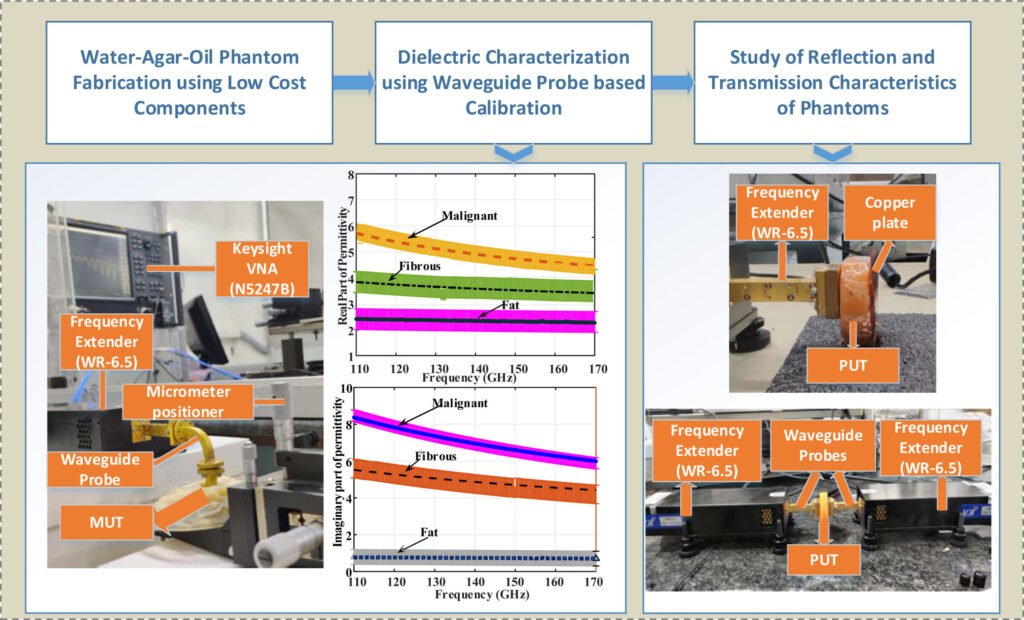
, agar, water, olive oil, and pectin. A waveguide probe-based calibration technique was used to extract the complex permittivities of the two-component (water–agar) and three-component (water-oil–agar) phantoms. The two-component phantoms were used to study the change in the dielectric properties of phantom with change in agar concentration. Water, agar, and varying proportions of oil were used to develop three-component phantom mixtures to mimic the dielectric properties of fat, fibrous and malignant breast tissues. Finally, the reflection and transmission properties of tissue-mimicking phantoms were tested using the waveguide probe calibration-based measurement setup. The difference in the S parameters between the three types of phantoms demonstrates the potential utility of D band-based data acquisition setups for tumor margin assessment applications .
A Systematic Method to Explore Radio-Frequency Non-Thermal Effect on the Growth of Saccharomyces Cerevisiae
Read Description
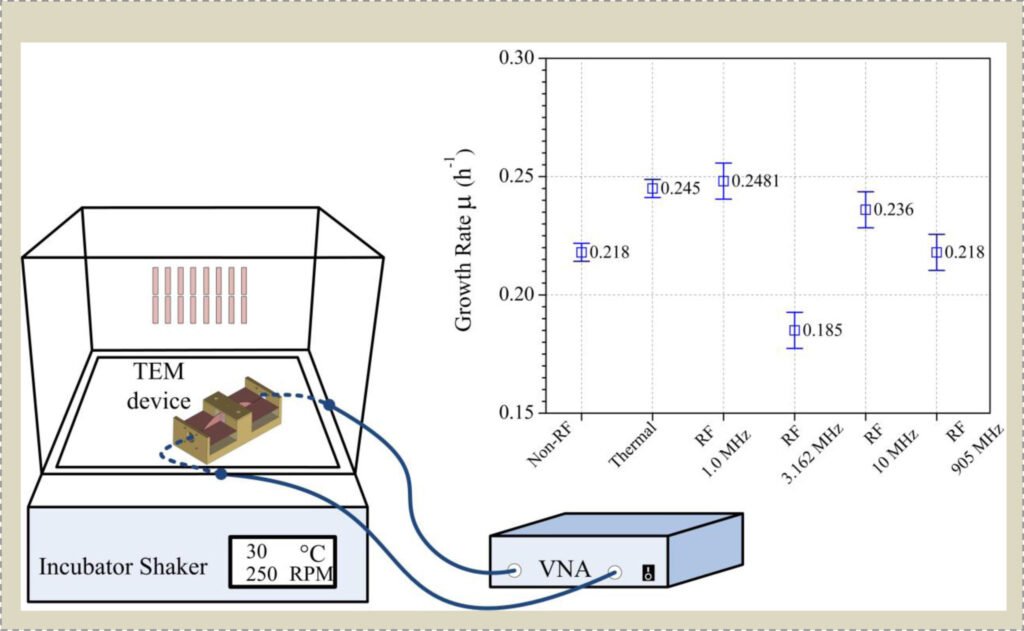
The method includes a transverse electro-magnetic (TEM) device and a dielectric spectroscopy technique for RF frequency selection. A stripline-based TEM device has two 240-μL chambers 3D printed for cell cultures. The fabricated device operates up to a few GHz and produces uniform RF fields for cell exposure testing. A vector network analyzer (VNA) was used to provide −20 dBm continuous-wave (CW) RF power. The heating effects on cell growth were estimated to be negligible. Frequency regions, where large permittivity differences between the medium and yeast cultures were obtained and used to select RF testing frequencies, e.g., 1.0 MHz, 3.162 MHz, 10 MHz. These differences may indicate RF field gradients near cell membrane, and the gradients may affect local nutrient transport. Additionally, RF at 905 MHz is tested for comparison purpose. Yeast cells in the exponential growth phase were examined at four RF frequencies and compared with two controls. One control device held at the same temperature as the test device, while the other control was held at a temperature 1 °C higher. The results showed that the RF fields at 3.162 MHz reduced yeast growth rates by 15.1%; however, the RF fields at 1.0 MHz enhanced cell growth by 13.7%, while the observed 4.3% growth rate increase at 10 MHz is insignificant and the RF fields at 905 MHz had no effects on the cell growth. These results showed a clear RF NT effects onS. cerevisiae growth that was frequency dependent. The hypothesized mechanisms of these effects, i.e., non-uniform RF fields near cell membranes and fluidic diodes in cell membrane ion channels may play important roles in nutrient transport, need to be further investigated.
A Fractal-RFID Based Sensing Tattoo for the Early Detection of Cracks in Implanted Metal Prostheses
Read Description
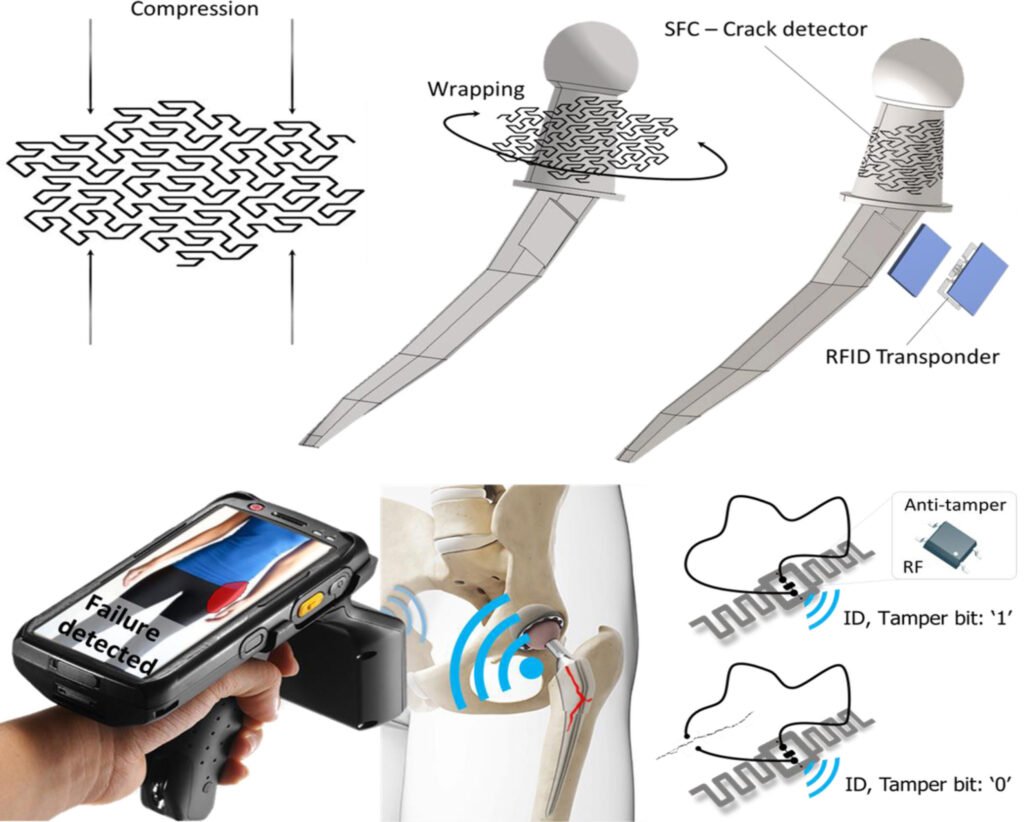
For this purpose, a tattoo-like sensing mechanism based on pre-fractal Space Fulling Curves is wrapped onto the medical device and coupled with a zero-power RFID transponder. The resulting smart prosthesis is capable to identify the early formation of cracks and to communicate with the exterior of the body by backscattering communication. The crack detection method exploits the anti-tamper port of common Radiofrequency Identification (RFID) ICs and a small antenna, acting as harvester, closely integrated with the metal prosthesis. Simulations and tests with a mockup of metallic hip prosthesis and a leg phantom demonstrate that the device can identify surface cracks as small as 0.6 mm and can be wireless interrogated outside the body from up to 70 cm distance. The required geometrical change to the prosthesis is modest and does not hinder its mechanical robustness. Experiments also confirmed that the health status of the prosthesis could be even monitored on-the-fly when the patient crosses a door equipped with a UHF reader. The sensorized prosthesis could hence become an enabler for the emerging Precision Medicine and for the Internet of Bodies paradigm.