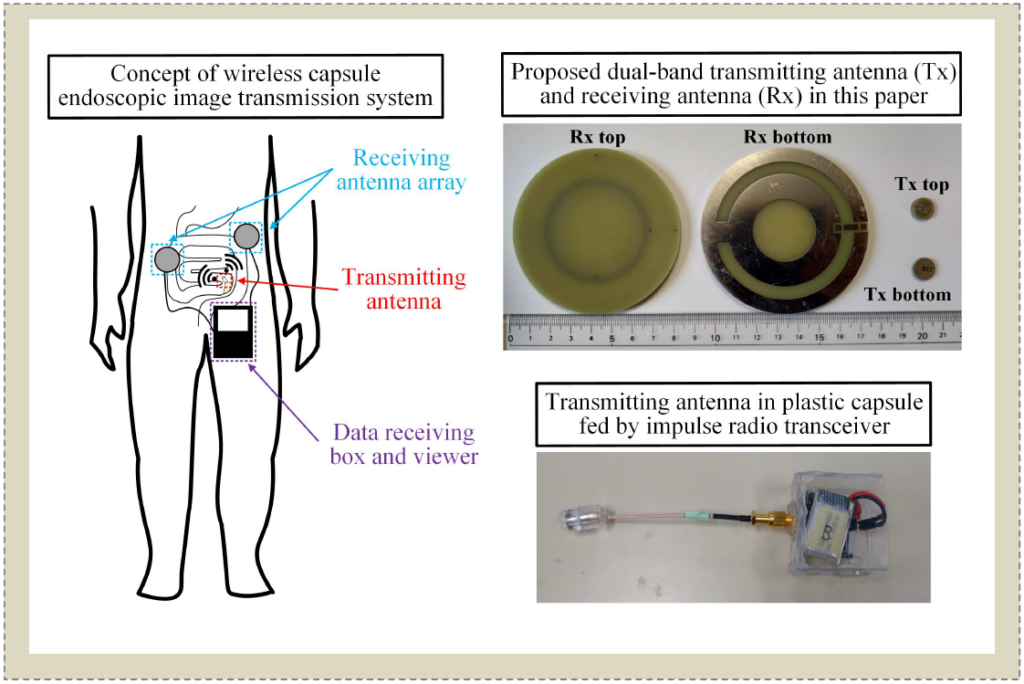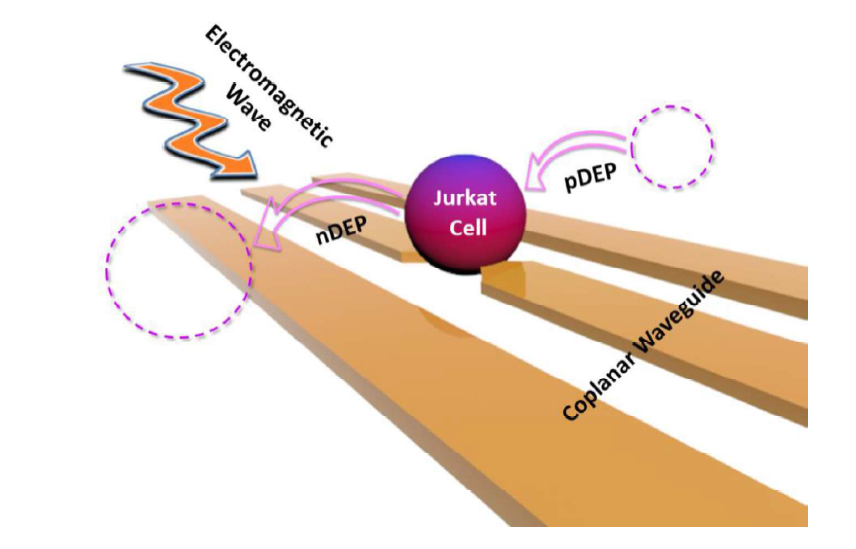
Development of a Biolabeling System Using Ferromagnetic Nanowires
Wen Zhou, Joseph Um, Yali Zhang, Alexander Nelson, Zohreh Nemati, Jaime Modiano, Bethanie Stadler, Rhonda Franklin.
Read Description
A study on single magnetic nanowire behavior is performed, and the algorithm used to characterize and identify each nanowire type separately and from a mix of multiple types is described. The algorithm is verified using measurement data from individual nanowire array samples and stacked combinations of cobalt, iron and nickel. From the strong correlation between the measured transmission coefficient data of magnetic nanowire arrays and a mathematical model, the potential of interpreting multiple magnetic nanowire types inside cells is confirmed.
×
Take Out Message
Take-Home Messages
- This paper proposed a new biolabeling system using ferromagnetic resonance properties of multiple magnetic nanowire types for in-vitro cancer type diagnosis.
- The exterior biofunctionalization that bonds ligands to specific cell types enables multiplexed cell labeling; while the intrinsic FMR properties of MNWs enables the spontaneous identification of multiple labels.
- The feasibility of the proposed biolabeling system is validated by applying the same MNW characterization and identification approach on MNW array measurements.
- The work confirms that distinct FMR signals can be detected in a mixed system of individual nanowire types using through transmission response. To account for low FMR signals and close FMR B-field spacing, a fitting algorithm can be used to validate the presence of the specific material types.
- This proposed biolabeling system has the capability to expand cancer cell detection throughput and reduce processing time; it can also be combined with other labeling methods to enhance the testing range of the current methods.
Interaction of Optical and EHF Waves with VO2 Nanosized Films and Particles
Alexander P. Kamantsev, Victor V. Koledov, Vladimir G. Shavrov, Dmitriy S. Kalenov, Mikhail P. Parkhomenko, Svetlana V. von Gratowski, Nooshin V. Shahmirzadi, Tavakol Pakizeh, Artemy V. Irzhak, Vladimir M. Serdyuk, Iuliia P. Novoselova, Anton A. Komlev, Andrey E. Komlev, Dmitriy A. Kuzmin, Igor V. Bychkov.
Read Description
The intrinsic radiation of VO2film in the 28-32 GHz band in the vicinity of MIT was observed. Optical Raman spectra of VO2film perforated by micron size holes arrays were studied. The micron holes and arrays show strong change of the Raman spectra at wavelength 532 nm due to the heating by laser beam. Optical properties of homogeneous VO2nanospheres (NSs) were studied theoretically as well. The size effect on the optical properties of VO2NSs was investigated. Transition into the metallic phase caused by heating of VO2-NSs leads to formation of localized surface plasmon resonance which red-shifts slightly while its size increases. Increasing of NS’s diameter in insulator state leads to the appearance of a peak in the visible wavelength. The optical spectra of VO2-NS are much broader than that of Ag-NS. This is associated with the fact that localized electric field in form of dipolar mode is more intensive for Ag than in case of VO2.
×
Take Out Message
Take-Home Messages
- The complete investigation of VO2 thin films interaction with extremely high frequency waves, as well as nanoparticles interaction with optical waves was conducted.
- The optical properties of VO2 nanosphere and size effect on these characteristics in insulator and metallic phases were investigated.
- VO2 in the form of nanoparticles and thin films reveals controllable properties. Thus, VO2 is a very proper material to use in sensors at different electromagnetic wave frequencies.
- The VO2 nanoparticles can be suggested as a heat transfer agent for cancer cells ablation or hyperthermia treatment.
- The intrinsic radiation of VO2 film in the 28-32 GHz band in the vicinity of metal-insulator phase transition was observed.
Real-Time Electrical Impedance Tomography of the Human Chest by means of a Learning-by-Examples Method
Marco Salucci, Giacomo Oliveri, Andrea Massa.
×
Take Out Message
Take-Home Messages
- The diagnosis of lung diseases such as, for example, pneumothorax, requires a continuous tracking of their air/liquid content. This latter influences the conductivity value of the chest and it can be inferred in real-time by solving the EIT inverse problem through LBE methodologies.
- The conclusion in this manuscript is that, thanks to the numerical and comparative assessment, it is possible to state the LBE technique at hand yields instantaneous and robust conductivity predictions starting from a low size training set.
- The targeted biological and/or medical application is the continuous real-time tracking of the lungs ventilation/status for patients under mechanical ventilation in intensive care units.
- The significance/breakthrough of this work is the numerical assessment of the reliability and the effectiveness of the LBE technique at hand as applied to solve the EIT inverse problem in real-time to faithfully inferring the lungs status.
- The numerical assessment presented in this paper has proven that the LBE method at hand overcomes representative state-of-the-art techniques thanks to the joint exploitation of the noise-filtering capabilities of the PLS and of the adaptive generation/refinement of the training database.
Validation of Clausius-Mossotti Function in Wideband Single-Cell Dielectrophoresis
Xiaotian Du, Xiao Ma, Hang Li, Lei Li, Xuanhong Cheng, James Hwang.
Read Description
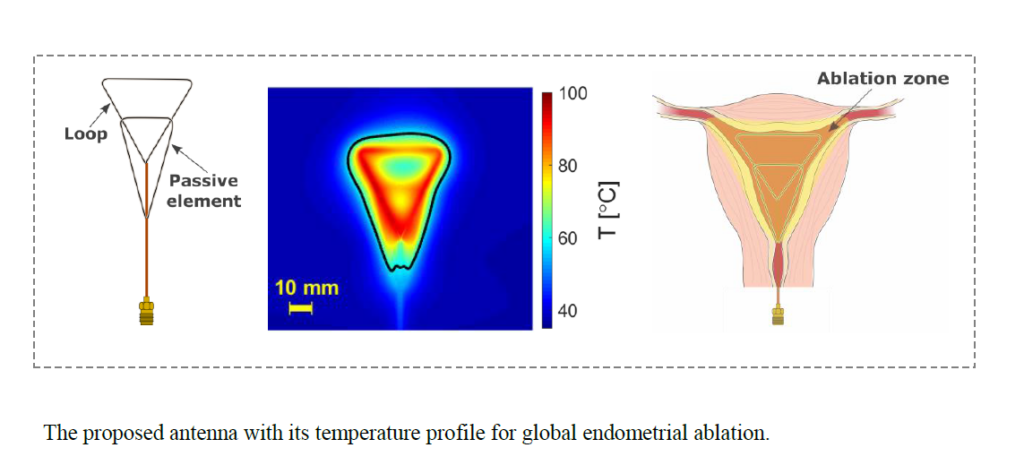
The calculated lower crossover frequency was found to be in general agreement with the measured values of 28 ± 4 kHz. However, the calculated upper crossover frequency was significantly different from the measured values of 326 ± 35 MHz The difference can be attributed to the field being highly nonuniform in single-cell dielectrophoresis, especially at higher frequencies. Additionally, with closely spaced electrodes in singlecell dielectrophoresis, adhesive force may have to be considered even for a relatively nonadherent Jurkat cell. In any case, the difference between the calculated and measured crossover frequency suggests that the classical Clausius-Mossotti function, originally derived from the Maxwell-Wagner mixture model of a cell suspension, may not apply to single-cell dielectrophoresis in a straightforward manner, especially at high frequencies.
×
Take Out Message
Take-Home Messages
- Using a wideband test setup of well-controlled impedance, both the lower and higher crossover frequencies for dielectrophoresis of a single biological cell was experimentally measured.
- The measured lower crossover frequency was found in general agreement with that calculated by using the Clausius-Mossotti function in conjunction with experimentally extracted cell characteristics such as membrane resistance and capacitance, as well as cytoplasm resistance and capacitance.
- New formulas were derived to evaluate the Clausius-Mossotti function from cell resistances and capacitances, instead of cell permittivity with assumed cell size and shape. The sensitivity of the crossover frequencies on the cell characteristics was analyzed, too.
- The measured higher crossover frequency was found lower than that calculated. The difference can be attributed to the field being highly nonuniform in single-cell dielectrophoresis, especially at higher frequencies. Additionally, with closely spaced electrodes in single-cell dielectrophoresis, adhesive force may have to be considered even for a relatively nonadherent Jurkat cell.
- The result suggests that the classical Clausius-Mossotti function, originally derived from the Maxwell-Wagner mixture model of a cell suspension, may not apply to single-cell dielectrophoresis in a straightforward manner, especially at high frequencies.
Design of a Microwave Global Endometrial Ablation Device
Hojjatollah Fallahi, Punit Prakash.
Read Description
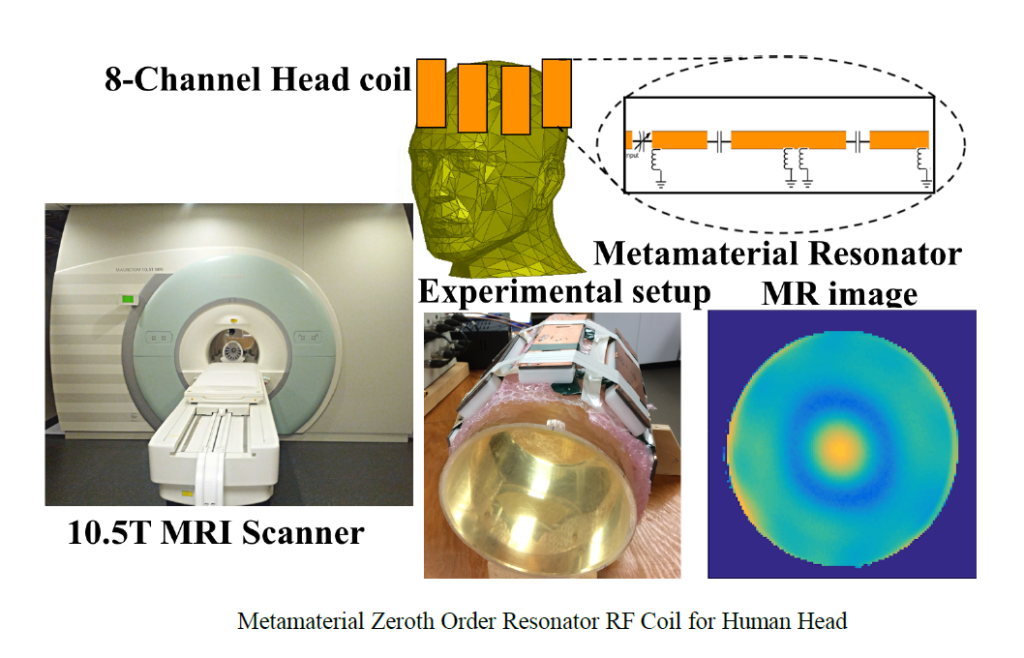
For treating large cavities, conformal microwave radiation is achieved by coupling the loop antenna with a passive element. A 3D-coupled FEM electromagnetic and heat transfer simulator was employed to optimize the antenna geometry with the goal of maximizing return loss at the 915 MHz operating frequency, and achieving adequate ablation depths for a range of uterine cavity sizes. Proof-of-concept devices were fabricated and experimentally evaluated in ex vivo tissue. The simulated and measured return loss of the optimized design was 20 dB at 915 MHz. Experiments in ex vivo tissue demonstrated the ability of the presented device to achieve mean ablation depths of 7.3 mm. We demonstrated a technique for creating planar ablation patterns suitable for global endometrial ablation of different uterine cavity sizes by employing a loop antenna with a passive element. Our design provides a planar ablation pattern by using a loop antenna with a passive element that will allow for ablation applications not realizable with conventional coaxial monopole, dipole, and slot antennas.
×
Take Out Message
Take-Home Messages
- A novel multistatic head imaging system utilising a software-defined radio, solid-state switching network, and static antenna array is proposed.
- The system is highly compact, lightweight, and inexpensive, attributes that could make it simple to transport to medical emergencies and could enable better accessibility for disadvantaged communities.
- Head imaging applications are the focus, with the system being verified using a simplified head phantom and targets emulating cancerous tumours and bleeds.
- The imaging accuracy of the proposed system is comparable to a Vector Network Analyser system using the same imaging algorithm, while greatly reducing size and cost.
- The system could produce images of the head phantom within less than a minute, making it feasible for use in time-critical applications.
Metamaterial Zeroth Order Resonator RF Coil for Human Head: Preliminary design for 10.5T MRI
Vijayaraghavan Panda, Lance Delabarre, Gregor Adriany, Thomas Vaughan, Anand Gopinath.
Read Description
Simulation and experimental results are provided for an 8-channel M-ZOR based RF coil in comparison with a standard high performance 8-channel dipole based RF coil for the 10.5T MRI system. Each element is 18 cm long, identical, evenly spaced along the circumference of the cylindrical phantom, loaded with dielectric material, and referred to as inverted Metamaterial Zeroth Order Resonator. The resonator elements are open circuited, matched, and tuned to 447.06 MHz with the phantom. An unloaded to loaded Q-factor ratio of 2.97 is obtained from the scattering matrix of the proposed design. The length independent nature of the proposed design and the flexibility of the lumped elements have provided an optimized element with a substrate thickness of roughly 3 mm. With the proposed design, there is a similar RF magnetic field strength (B1+) to SAR ratio with a reduced 10g averaged SAR of 2.892 for the same input power compared to that of a dipole coil. This could make the coil acceptable for the clinical high-quality imaging.
×
Take Out Message
Take-Home Messages
- The first prototype RF head coil using Metamaterial Zeroth Order Resonator structure on a thin substrate for 10.5T MRI is discussed.
- This work is targeted for the development of an efficient RF coil for human head imaging at Ultra-High Magnetic fields.
- The coil utilizes a periodic structure that is physical length independent, has high unloaded to loaded Q-factor ratio, and is efficient for the RF coil applications
- The proposed coil is proven to be safe for clinical use and has a good coil efficiency.